Electronic signatures – what are they and how do they work?
On this page, we explain what an electronic signature is and how it works.
What is an electronic signature, and how does it work?
Electronic signatures make it possible to sign documents digitally without printing, signing on paper and scanning documents back in.
With DealBuilder, documents can be signed using click-to-sign electronic signatures, handwritten signatures or electronic identity solutions, depending on the level of identification and documentation required. DealBuilder is designed for both domestic and international signing processes and uses internationally recognised standards for signed PDF documents.
On this page, we explain how electronic signatures work, what signing methods are available, what is documented during the signing process, and how signed documents can be secured and validated.


What is an electronic signature?
An electronic signature is electronic information associated with a document and used by a person to sign it.
Electronic signatures can take different forms. In many business processes, the signer actively confirms and signs the document electronically. In other situations, additional identity verification may be required.
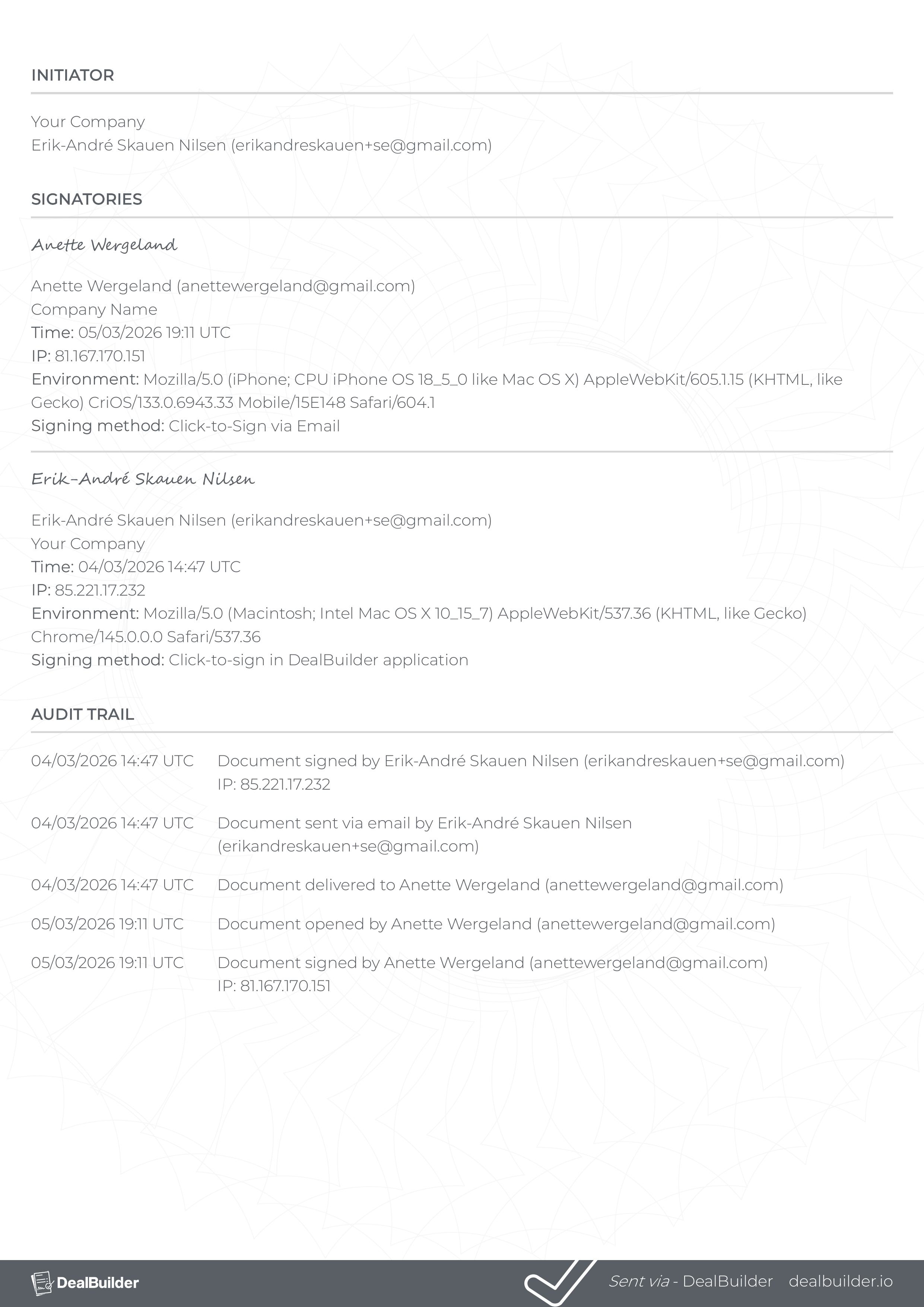
When a document is signed through DealBuilder, information about the signature and the signing process is recorded.
This makes it possible to document who signed, how the document was signed and when the signing took place.

Which signing methods does DealBuilder support?
DealBuilder supports several types of electronic signatures.
Electronic identity and BankID
For processes where stronger identity verification is required, DealBuilder also supports electronic identity solutions.
These include Norwegian BankID, Swedish BankID, Danish MitID and Finnish Trust Network.
This allows businesses to combine simple international signing processes with stronger electronic identity verification where appropriate.
Click-to-sign electronic signatures
Click-to-sign is a simple and efficient way to sign documents electronically.
The signer receives access to the document, reviews the content and signs by actively confirming the signature.
The signing action is recorded and linked to the document and the signing process.
Click-to-sign works particularly well for high-volume business processes where additional electronic identity verification is not required.
The signer can complete the process on a computer, tablet or mobile device without installing additional software.
Handwritten electronic signatures
With a handwritten signature, the signer can draw their signature directly on a mobile phone or tablet.
On a computer, the signer can use a mouse or trackpad to draw their signature.
The handwritten signature is linked to the document and documented together with the rest of the signing process.
This gives businesses a familiar signing experience while retaining the benefits of a fully digital workflow.
Choosing the appropriate signing method
Businesses can choose the appropriate signing method for each use case.
The level of identification and documentation required determines whether click-to-sign, handwritten signatures or electronic identity verification is appropriate.

Who is DealBuilder for – and what is it used for?
DealBuilder is designed for small and large businesses that want a simple but comprehensive solution for electronic signatures and document workflows.
Some of the most common use cases are proposals and agreements with customers and HR documents, including employment agreements, contract amendments, performance review documents and other employee-related documentation. DealBuilder is also used for board documents, procurement and supplier agreements, powers of attorney, internal approvals and a wide range of other business documents.
The platform can support anything from occasional signatures to large document volumes across multiple departments, companies and countries. Sales, HR, administration, boards, procurement, operations and legal teams can work in the same solution with their own documents, workflows and access permissions.
Businesses can sign existing PDF documents, create reusable document templates, choose between different signing methods and connect DealBuilder to other systems through integrations, API and automation.
DealBuilder is used by businesses across different industries and company sizes, including Dr.Dropin, Sigdal Kjøkken, Burger King, Solid Media, Falck, Avonova, Homely and Energima Group.
DealBuilder has also been selected as the digital signing technology for DRIVE Mobility, the Norwegian automotive industry's joint digital initiative representing around 330 dealerships.
Read our customer stories →